Work
related travel took me to a nondescript location away from Bangalore’s madding
crowds last week. However the place I halted was anything but ordinary, this inspection Bunglow (IB) had an eclectic
mix of the old & new. Thanks to the former chief minister (Mr. Yeddyurappa whose constituency falls here) a
spanking new guest house with inner courtyard rubs shoulder with some old colonial
bungalows on a sprawling govt estate laid
out with well manicured garden and a variety of trees. Serene surroundings , a garden buzzing with birds, insects & troop of monkeys
and away from the hustle and bustle of
the city, a welcome tonic for the tired body & weary soul.
February 26, 2012


February 4, 2012
An Indian Summer in Germany
Mr Wolfgang Hoeltgen who was featured earlier
in this blog is a tireless campaigner of German - India relations. His
indefatigable spirit takes him across the country, and which has become an
annual pilgrimage for sometime now, spreading GIBC mantra of catalyzing business
exchange between the 2 countries especially the region of Niedersachsen. This is
despite the almost fatal car crash incident he was involved on the Pune - Mumbai
highway last year (some bone chilling snaps of the accident). Apart from the shock & trauma of the accident he also
underwent an ordeal with the Hospital which not only treated but also fleeced
him to the hilt.
Yet none of these stops him coming to India
year after year. I caught up with him this time around in Bangalore and we
spent some time together. This years
sojourn also had its share of unfortunate event, he had just lost his wallet in
the Taj Vivanta where he was staying and along with it some considerable amount
of cash. I offered him some financial help but he politely turned it down. It
later turned out that the International ATM card that he was carrying was of no
use in India. Weirdly enough none of the multinational Pvt Bank ATMs (we tried
2-3 bank ATMS) were able to transact & dispense the cash. Yet though somehow
he managed to chug along with his journey without seeking any help.
 |
| Event Logo |
Beginning this year I will represent GIBC Hannover impulse as Strategic partner representing Bangalore region. Hopefully
I wish to translate this into mutually fruitful Business exchange. This year
also marks an eventful milestone in the History between the 2 countries i.e.,
60 years of diplomatic relations and to
commemorate that GIBC is bringing an Indian summer to Germany . For 4 full days
the spotlight will be on India at the famous Hannover fair called India days Hannover packed with various events. I have coined it an ‘Achtung Indie’ event
for the sheer novelty of its theme & significance. This event has something for everyone; Industry captains, Entrepreneurs, Students, Academicians,
Cultural enthusiasts and think-tanks all alike.
January 22, 2012
🕰️ A Nostalgic Journey: The 1987 Batch of St. Mary’s High School Belgaum Relives School Days 🕰️
Imagine turning back the clock by 25 years, even just for a day. For many, it's a wishful thought. But for us, the 1987 batch of St. Mary’s High School in Belgaum, this dream became a delightful reality.
It all started with a small Facebook group last year, and soon, the excitement of our approaching Silver Jubilee reunion caught on. We approached the school, and Ms. Jasmine Rubdy, our former science teacher, graciously allowed us to relive a day in our old school routine.

On a crisp winter morning, we found ourselves lined up for the school prayers, not on the ground as in the past, but on the school portico. This shift in location didn't dampen our spirits. We then joined a classroom session with some of our now-retired teachers. The classroom buzzed with the same energy, and our teachers' eyes sparkled with a mix of nostalgia and affection, their sternness softened by years.
Lunch under the old banyan trees followed. The school had changed, but these trees remained, a comforting, familiar presence. In the afternoon, we played football under the sun and participated in competitive sports, reliving our youthful exuberance.
The highlight was a special 'passing out' parade for our batch, a ceremony we had missed 25 years ago. This symbolic ritual was deeply moving, a chance to reclaim a missed milestone.
The day culminated with an evening gathering, graced briefly by our former principal, Mr. Guruprem David. Despite his health challenges, his animated wave and presence were a poignant reminder of our shared past.
This reunion wasn't just about memories; it was a bridge connecting our past with the present, a testament to the enduring bonds formed in the hallways of St. Mary’s High School.🏫❤️
November 20, 2011
Bengaluru, Bangalore, Bengaluru: Imaginations and Their Times

The word Bangalore or Bengaluru evokes different feelings and opinions among different people. While many have lived here and experienced the city first hand but many more by the perception & reputation it has built over the years . I for one belong to the former category and have personally witnessed the massive makeover of the city between 1994 and now. So in that sense a book on the city and its history evinced my interest and I picked it recently.
The 16th century history provides the early backdrop of the city and its founder Kempegowda emerges from the political fog of the Krishnadevaraya’s rule of the period. The early parts of the city, Pete’s (markets) divided on the basis of caste and later the emergence of the British cantonment that heralded the earliest recorded migrations to the city makes for interesting reading. How the early migrations induced language and not class conflicts particularly evokes interest.
Tracing the roots of a city and its various facets spanning a 500 year period is no doubt arduous and this book will disappoint those seeking scholarly depth. However many interesting & informative nuggets on the various aspects of the city can be found here and the book covers in a manner that juggles between documentary, academia, and coffee table reading .
(Other trivia about Bangalore not related to the book)
How did Bengaluru get its name?
The most famous legend says that Hoysala King Veera Ballala II, on one of his hunting expeditions, stumbled upon an old dwelling where lived an old woman. She served him some boiled beans. Overwhelmed he named the place Benda-kaaluru (the town of boiled beans), which later became Bengaluru when Kempe Gowda-I laid the first stone of the modem city in 1537, starting with the petes, now at the heart of the city. However, facts don't corroborate this story. The Hoysalas ruled between the 10th and the 14th centuries. Kernpegowda lived in the 16th century. But, the very first instance of the name appears in a stone inscription at Begur Nageshwara Temple in South Bengaluru. The stone dates back to 890 AD, the Ganga period. This implies that Bengaluru is at least 1,129 years old. The slab is also proof that a village by such name existed much before the Hoysalas and the Kempegowdas. P V Krishnamurthy, an epigraphist and historian. Says "Kempegowda I is rightly credited for building the infrastructure for Bengaluru and paving the way for today's vibrant cosmopolitan trade town. However, Kern pegowda could not be the founder,"


1. It has the impeccable record of highest growth within a span of 20 years.
2. Bangalore city has highest number of pubs in Asia.
3. It has highest number of cigarette smokers in India
4. Bengaluru has the highest number of software companies in India - 212, followed by Hyderabad -108, Pune - 97. Hence called the silicon valley of India.
5. It has 21 engineering colleges, which is highest in the world in a given city. Bangalore University has 57 engineering colleges affiliated to it, which is highest in the world.
6. It is the only city in the world to have commercial and defense airport operating from the same strip.
7. Bangalore has highest number of public sectors and government organizations in India.
8. Bangalore University has highest number of students going abroad for higher studies taking the first place from IIT-Kanpur.
9. The mega city has only 48% of local population (i.e.#Kannadigas). Hence a true cosmopolitan with around 25% Tamilians, 14% Telugites, 10% #Keralites, 8% Europeans, 6% a mixture of all races.
10. Bangalore police has the reputation of being second best in India after Delhi. Once a rowdy hub (back in the 1980s) the Bangalore City Police (BCP) have done a remarkable job in cleaning notorious elements like Kotwal Ramachandra, Jairaj, Oil Kumar, Dandupalya Gang among others

18. Whitefield was developed as a self-sufficient farming community for Anglo-Indians way back in the year 1880. Today its a bustling IT corridor but in yesteryears had elegant spanish style villa communities. Winston Churchill, the erstwhile Prime Minister of UK, was a regular Visitor at the Waverly Inn in whitefield Bangalore
19. The name 'Bengaluru' was first mentioned in 9th century inscription in a temple in Begur, a small town off the Bangalore-Hosur highway. This was way before the city was discovered by Kempegowda in 1537 AD


10 Interesting facts about Bangalore
1. It has the impeccable record of highest growth within a span of 20 years.
2. Bangalore city has highest number of pubs in Asia.
3. It has highest number of cigarette smokers in India
4. Bengaluru has the highest number of software companies in India - 212, followed by Hyderabad -108, Pune - 97. Hence called the silicon valley of India.
5. It has 21 engineering colleges, which is highest in the world in a given city. Bangalore University has 57 engineering colleges affiliated to it, which is highest in the world.
6. It is the only city in the world to have commercial and defense airport operating from the same strip.
7. Bangalore has highest number of public sectors and government organizations in India.
8. Bangalore University has highest number of students going abroad for higher studies taking the first place from IIT-Kanpur.
9. The mega city has only 48% of local population (i.e.#Kannadigas). Hence a true cosmopolitan with around 25% Tamilians, 14% Telugites, 10% #Keralites, 8% Europeans, 6% a mixture of all races.
10. Bangalore police has the reputation of being second best in India after Delhi. Once a rowdy hub (back in the 1980s) the Bangalore City Police (BCP) have done a remarkable job in cleaning notorious elements like Kotwal Ramachandra, Jairaj, Oil Kumar, Dandupalya Gang among others
20 mind blowing facts about Bangalore a.k.a Bengaluru that you should know

ಕೆಂಪೇಗೌಡ
ಕಟ್ಟಿದ ಬೆಂಗಳೂರು the Bengaluru that was built by Kempe Gowda.
1. When Kempegowda presented blue print for constructing Bengaluru city to the Vijayanagara King, impressed with the vision & planning, the king not only approved it, but also gave 50000 gold coins(varahas), & six nearby areas of Bengaluru to be included under the new city.
2. Kempegowda had studied 8 years in a Gurukula, in Hesaraghatta before taking the reigns of Yelahanka ruled by his ancestors for decades. Vijayanagar Kings advised Kempegowda to ensure the new city of Bengaluru will be a commercial & dharmic Centre & self sufficient in water requirement.
3. Bhoomi Puja of Bengaluru was done in an area between Domluru & Yelahanka. Havana & Yagna was Conducted by the Gurukula teachers where Kempegowda had studied. Massive Smoke and Vedaghosha had filled the air due to Vedic rituals.
4. East-West line became Chikkapete(retail market), North-South line became Doddapete (wholesale market-current avenue road). Akki,Ragi,Arale & taragu petes for grocery market, ganigara pete for oil, uppara pete for salt, kumbara pete for pottery, Tigalara pete for flower business, Nagarth pete for gold/silver biz, Bale pete for bangles and chain came up.
5. Dharmambudhi lake (bus stand), Kempambudhi lake, Halsuru lake & Yediyuru lake were constructed for mobilizing water for drinking & washing.
6. For Irrigation requirement Kempegowda constructed Sampangi lake (Current indoor stadium).
7. Having studied in Gurukula & being a totally dharmic king, Kempegowda constructed Gavi Gangadhareshwara temple, Basavanagudi’s Big bull -Nandi temple, Doddapete’s Anjaneya temple.
8. Gavi Gangadhareshwara temple, in Gavipura, continues to amaze people with the extraordinary knowledge of astronomy and temple architecture it synthesises to ensure Sun rays fall on the murthy of Lord Shiva on Makarasankranti every year.
9. For protection Kempegowda constructed forts all round Bengaluru. Mahadwaras(main entrances) for these forts were constructed at Yelahanka, Halasuru, Kengeri, & Anekal.
10. Important aspect of Bengaluru, was the design, implementation & interlinking of Raja Kaluves (king canals which exist even today). When a lake was filled with rain water, extra water was fed into other lakes through these King canals, and finally to outside the city.
11. By the quirk of fate, Kempegowda who founded Bengaluru, was arrested and imprisoned at anegondi on charges of treason. The complaints to the Vijayanagar king was given by Channapttana local chieftain. At this time Vijayanagara Kingdom was getting weakened with rebellion.
12. To protect Bengaluru from evil enemies, Kempegowda’s sons constructed watch towers at Lalbagh, Halsuru, Sadashivanagara, and Chamarajapete. It is believed Dharmaraya temples lies at equidistant from these watch towers.
13. Every evening from atop an elevated boulder, bugle sound (KahaLe) was blown to indicate all is well in the city. If the the bugle sound was heard at other times, it indicated threat to the city. This place is today’s Bugle rock in Basavanagudi.
14. King Aliya Ramaraya released Kempegowda from the prison after five years, realising Kempegowda was innocent. Kempegowda returned to Bengaluru on a triumphant note with people giving him a a rousing welcome reception. His popularity had in fact increased after his arrest.
15. Kempegowda was made to sit on a silver swing(vuyyale) & milk abhisheka was performed on him as part of his welcome. The place where this welcome was given to Kempegowda, was called VuyyaLe Kavalu, which in due course has become Vyali Kaval.
16. Kempegowda who was an outstanding visionary, planner, dharmic leader, and a people’s leader whom every Bengalurian must thank, accidentally died in 1569, near Magadi while returning from Kunigal
1. When Kempegowda presented blue print for constructing Bengaluru city to the Vijayanagara King, impressed with the vision & planning, the king not only approved it, but also gave 50000 gold coins(varahas), & six nearby areas of Bengaluru to be included under the new city.
2. Kempegowda had studied 8 years in a Gurukula, in Hesaraghatta before taking the reigns of Yelahanka ruled by his ancestors for decades. Vijayanagar Kings advised Kempegowda to ensure the new city of Bengaluru will be a commercial & dharmic Centre & self sufficient in water requirement.
3. Bhoomi Puja of Bengaluru was done in an area between Domluru & Yelahanka. Havana & Yagna was Conducted by the Gurukula teachers where Kempegowda had studied. Massive Smoke and Vedaghosha had filled the air due to Vedic rituals.
4. East-West line became Chikkapete(retail market), North-South line became Doddapete (wholesale market-current avenue road). Akki,Ragi,Arale & taragu petes for grocery market, ganigara pete for oil, uppara pete for salt, kumbara pete for pottery, Tigalara pete for flower business, Nagarth pete for gold/silver biz, Bale pete for bangles and chain came up.
5. Dharmambudhi lake (bus stand), Kempambudhi lake, Halsuru lake & Yediyuru lake were constructed for mobilizing water for drinking & washing.
6. For Irrigation requirement Kempegowda constructed Sampangi lake (Current indoor stadium).
7. Having studied in Gurukula & being a totally dharmic king, Kempegowda constructed Gavi Gangadhareshwara temple, Basavanagudi’s Big bull -Nandi temple, Doddapete’s Anjaneya temple.
8. Gavi Gangadhareshwara temple, in Gavipura, continues to amaze people with the extraordinary knowledge of astronomy and temple architecture it synthesises to ensure Sun rays fall on the murthy of Lord Shiva on Makarasankranti every year.
9. For protection Kempegowda constructed forts all round Bengaluru. Mahadwaras(main entrances) for these forts were constructed at Yelahanka, Halasuru, Kengeri, & Anekal.
10. Important aspect of Bengaluru, was the design, implementation & interlinking of Raja Kaluves (king canals which exist even today). When a lake was filled with rain water, extra water was fed into other lakes through these King canals, and finally to outside the city.
11. By the quirk of fate, Kempegowda who founded Bengaluru, was arrested and imprisoned at anegondi on charges of treason. The complaints to the Vijayanagar king was given by Channapttana local chieftain. At this time Vijayanagara Kingdom was getting weakened with rebellion.
12. To protect Bengaluru from evil enemies, Kempegowda’s sons constructed watch towers at Lalbagh, Halsuru, Sadashivanagara, and Chamarajapete. It is believed Dharmaraya temples lies at equidistant from these watch towers.
13. Every evening from atop an elevated boulder, bugle sound (KahaLe) was blown to indicate all is well in the city. If the the bugle sound was heard at other times, it indicated threat to the city. This place is today’s Bugle rock in Basavanagudi.
14. King Aliya Ramaraya released Kempegowda from the prison after five years, realising Kempegowda was innocent. Kempegowda returned to Bengaluru on a triumphant note with people giving him a a rousing welcome reception. His popularity had in fact increased after his arrest.
15. Kempegowda was made to sit on a silver swing(vuyyale) & milk abhisheka was performed on him as part of his welcome. The place where this welcome was given to Kempegowda, was called VuyyaLe Kavalu, which in due course has become Vyali Kaval.
16. Kempegowda who was an outstanding visionary, planner, dharmic leader, and a people’s leader whom every Bengalurian must thank, accidentally died in 1569, near Magadi while returning from Kunigal
17. Two of Bengaluru’s famous localities -Basavanagudi and Malleshwaram -were first established as ‘safe, hygienic suburbs’ when the city was affected by the deadly plague in 1898
18. Whitefield was developed as a self-sufficient farming community for Anglo-Indians way back in the year 1880. Today its a bustling IT corridor but in yesteryears had elegant spanish style villa communities. Winston Churchill, the erstwhile Prime Minister of UK, was a regular Visitor at the Waverly Inn in whitefield Bangalore
19. The name 'Bengaluru' was first mentioned in 9th century inscription in a temple in Begur, a small town off the Bangalore-Hosur highway. This was way before the city was discovered by Kempegowda in 1537 AD
20. Bangalore has prehistoric dolmens (miniature stone houses) installed in burial sites to commemorate the dead in areas like Bannerghatta, Devanahalli, and even Lalbagh.


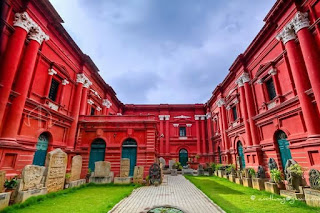

Images of Bangalore


Subscribe to:
Posts (Atom)
