From My Corner of the World

This is my personal diary — a space where I try to make sense of the world around me. You'll find short prose on contemporary topics that catch my interest. What can you expect? The best adjectives? … maybe, once in a while. Flowery verbs? … not really my thing. Haiku-like brevity? … I try. Thanks for stopping by — hope you’ll visit again.

January 8, 2023

What makes Singapore successful?

Singapore is well known for many reasons, be its charismatic leader Lee Kuan Yew or its spotless clean surroundings, its reputation as a global financial hub, its impressive high rises, and tourist attractions all count among its charm. It was hard to miss all these vibes when I visited Singapore recently, and I wondered what makes them so successful? and soon after i got the answer in one of the incidents I encountered there.

Among the things I and my wife decided was to explore Singapore independently by taking off some time from the fixed tour schedule. This meant that we went on our own in the city buses and underground trains exploring malls, and roadside shops, and eateries. The buses are frequent there and it is easy to catch a bus around the corner (as owning a car is an expensive affair). The buses are somewhat similar to the Volvo buses that ply in Bangalore but much less crowded. Also, there is no conductor and you have to deposit the money and collect your tickets in a ticket vending machine next to the driver.

Before I get to the incident I pondered over the title and began watching Youtube lectures of Lee Kuan Yew (some call him a benevolent dictator) to understand his mindset. Here is what i realized

How Lee Kuan Yew steered Singapore from ‘a third world island into a first world oasis in a third world region’?

  • He brought pragmatic solutions to the island nation, learning from the mistakes of world leaders like Nehru, Neyrere, Sukarno and others. One of the lesson he quickly learnt (in the 1960s) was that their policies of state intervention in developing their economies rather than bringing free market forces was failing them.
  • He did not risk his country’s future on theories but practical ideas that worked. He did not want to create a new economy based  ‘on to port trade ‘ with their neighbours. He drew heavily from the ‘leap frogging’ strategy adopted by Israel . The fallout of the cultural revolution in China which peaked in 1979 has a fortuitous effect in bringing big IT investments in S’pore bypassing Taiwan and Hongkong. That helped start a economic miracle
  • His reconstruction of S’pore was based on the pillars of economic viability (based on return on capital RoC maxim),  industrial peace-political stability and English as the working medium.
  • To attract first world entrepreneurs and their cohorts to set up base in the island, he put in place upto date facilities in telecom & transportation, aiports and container terminals, personal and public security, first world health facilities, and a living environment equal to the first world. He also brought about peace between worker unions and their management to improve productivity
  • He then made people change their habits & behaviour to match the first world infrastructure. This meant no spitting and chewing gums, clean public toilets, and no litter. He also took up 'greening' of the island with trees, palms, shrubs, flowers and creepers (which was one of the first thing that struck me while we travelled around the island). He involved the whole population in planting and caring for them

Singapore flyer


The incident

On the second day of the guided city tour, we left the group after dinner and decided to try the Singapore Flyer (a giant city wheel ride akin to that in London) on our own. The glass capsules give you a thrilling all-round view of the city and it is especially colorful at night (tickets cost us SD40 pp). After the 30-minute ride, we decided to take the underground train back to the hotel. It was around 10 in the night and we walked across the road and entered the downtown terminal, one block away. After a 500-meter walk inside the terminus cross to the far end, we had to go underground to catch the driverless automated trains.

Regular passengers carry passes or general tickets (of designated value) from the automated machines (GTMs). However, we did not have the tickets and without one the barriers wouldn't let us go underground. So I approached the Passenger Service Centre next to the entrance and inquired, operator said I had to take the $20 value tickets per person to go further. I told him that our visit was unplanned and buying the tickets did not make sense as we could hire a taxi for all three of us at that price. The man quickly understood my predicament and asked me to wait while he checked with his superior in the cabin. In no time he allowed us get inside through another gate, told us to go down the escalator, and gave us directions on how to go and take tickets at the nearest counter. 

The efficiency of the operator was astounding, in no time he had created an opportunity for us to travel by the MRT underground train. We did as were told and were able to catch the next train in a few minutes. This time it worked out a lot more reasonably at around $2 per person. We dropped off at a station called McPhersons and then took the city bus to the hotel. Even at 11 in the night bus was near full capacity. Everywhere the operators (whether it is the Bus drivers or MRT staff) were helpful, polite and efficient. It is embedded in their daily lives and attitudes there which makes an incremental and significant difference in the success of this tiny island nation.

February 6, 2022

Unlocking Economic Potential: India-Pakistan Trade Relations

Pakistan's New Security Policy and Its Economic Implications

The unfolding events in Pakistan reveal a fresh attempt to reinvent itself through a new national security policy (NSP), yet it seems to be taking two steps forward and one step back with its prerequisites for lasting peace with India, a century-old conundrum.

Pakistan's current leadership, with the military's influence not far behind, appears to be urgently navigating out of an economic crisis and a deteriorating geopolitical stance, once considered a strategic asset. However, the NSP might fall short of being the solution they need.

From Qayamat se Tomato Tak: The Tangible Benefits of Cooperation


It's worth noting that fostering better relations with India could be a lifeline for Pakistan, providing essential goods and potentially injecting millions into its faltering economy through trade. Having good relations with India will not only provide essential lifeline like vegetables (my earlier article Qayamat se Tomato tak on the subject) and some other commodities but also potentially add millions of dollars of economic trade value to its failing economy.  Despite India offering Most Favored Nation (MFN) status to Pakistan, the latter has yet to capitalize on it. Inquiries at the trade desk of Pakistan's High Commission in India would likely highlight these missed opportunities.

The Case for Normalization: Prof. Ishtiaq Ahmed's Insights on India-Pakistan Trade


In the below instance Prof. Ishtiaq ahmed, a swedish scholar of Pakistani origin makes a strong case to normalize business relations with India

   Responsive Video Embed


India & Pakistan; the trade prospects

I have been in 2 management roles where i see huge economic opportunity with our estranged neighbour. The first I saw when i was with Milagrow, whose founder late Rajeev Karwal was in touch with a company called Dawlence in Pakistan. This struggling company wanted to utilise his turnaround skills in consumer durable industry and replicate what he had successfully done with LG in India earlier. A lot of things could have happened including a possible visit of mine to Pakistan if not for a deep freezing of relations in 2008 (post Mumbai attacks). As i have written earlier, India struggles with Pakistan as the proverbial Vikram Vs Betaal  

Currently in my executive role at Homeomart.com I see large number of Pakistani visitors regularly seeking homeopathic remedies for their health and wellness. In the illustrated image below, one of the visitor is seeking the service more as a 'favour for neighbour' because he believes that we are antagonistic to him. The reality is that neither DHL or India Post is ready to offer intermediary services to make this workable. A turnaround in relations could possibly mean Homeomart investing in Pakistan to tap its burgeoning market but that is a distant reality subject to its future relations with India and the economic climate it creates there. With various religious extremists groups created by ISI running loose there, it looks a bleak prospect

Pakistani customer seeking Indian ecommerce service

Beyond Borders: Cultural and Economic Synergies Await Realization

Pakistan economy can improve drastically if it opens its borders to Indian companies. There are many factors that can work to galvanize the trade ties (as opposed to 'Galwan'ize' which China did to hit on its own foot). If Pakistans scans its neighbourhood, it is only the Indian economy that can provide many advantages

  • Physical Proximity to one of the world's fastest growing markets. Quick flow of goods and services. 
  • Cultural proximity can cut communication issues and build trust that can help businesses grow
  • Overlap of interests. For instance Pakistani love of music, films, cuisine, even a medical thing like homeopathy has a lot of cultural commons.

Your economic turnaround starts at your door steps Pakistan, as the saying goes 'modesty begins at home'. 

December 12, 2021

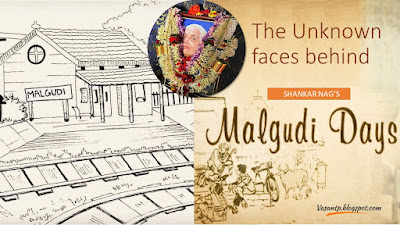
Malgudi Days Story – the unknown faces behind its success and the village now

If you put a timeline to it, it has nearly been 4 decades since Malgudi days catapulted into India’s collective imagination on the teletube. But no traces of it can be found in this tiny hamlet on the edge of western ghats as I passed through it recently. I was on a trip to Shringeri from Manipal and after climbing an arduous Ghat section, the main road took us through Agumbe which was basically a stretch of a one kilometer road that meandered through houses and some tea stalls on either sides. There was are no traces of Malgudi except for the familiar sight of old world tiled roof houses one of which was ‘Dodda Mane’ (of which I will come to shortly).

Malgudi village now Malgudi days summary


Agumbe, the village that became Malgudi days (the iconic TV serial) - old charm, the sleepiness, the rustic ambience


Agumbe received more recognition for ‘Malgudi Days’ serials than the highest average annual rainfall it receives in India after Cherrapunji. Agumbe beat Nanjangudi town which the director of this TV serial dallied and courted for a while for his ‘Malgudi days’ before zeroing on this town on the edge of western Ghats. The search for this fictional town of Malgudi actually began in Mysore and surrounding areas. Mysore where RKN lived and wrote this masterpiece initially conceived of this heritage city but by the time Shankar wanted to flesh it out on the small television canvas it could no longer fit the bill of an idyllic place as urbanization had taken over

While Shankar was searching in the old Mysore region, it was Anant Nag (his elder brother) who asked him to check out Agumbe. Story goes that Anant Nag discovered the old world charm of Agumbe when his car broke down in one of the treacherous hair pin bends of the steep ghats in the vicinity of Agumbe. He could have probably gone there for help and was impressed by the beauty of the malnad heartland

Some people say the word Malgudi comes from two old locality names in Bangalore, Mal as in (Malleswaram) and Gudi (Basavangudi). RKN may have liberally borrowed from the people living in these localities to smoke out his characters. Many of the old houses and streets here still show some traces of the Malgudian world. “ Malgudi is a town habited by timeless characters, who could be living anywhere in the world…….It is where we all belong and where we wish we lived” RKN once said.
 

Malgudi days image chatGPT

AI (ChatGPT 4.0 rendered image created to capture the essence of Malgudi Days as described in the blog post

The unknown faces behind 'Malgudi days', the TV serial that captured the imagination of the global television audience


There are many known people who contributed to the success of Malgudi days. It was Ananth Nag (brother of Shankar Nag) who prodded a disinterested Shankar to take up the project. Producer TS Narasimhan (of Banker Margayya fame) who was related to R K Narayan joined hands, Vaidyanathan came up with his signature tune “Taa Naa Naa Tana Nana Naa” are well known names behind the scenes.

Some of the lesser known names like Ramesh Bhat (production assistant), John Devraj (art director) and town planner gave Agumbe some makeover like water fountain and colonial ‘Robert’ statue also take credit

However names like Kasturi Jayrao of Doddamane of Agumbe may not appear on the credit scroll. But without her, the whole idea of hosting 100 plus crew of Malgudi days in this hamlet with no lodges, hotels, or even a telephone exchange would have been impossible. It was Kasturi Jayrao who encouraged Shankar Nag who came scouting around and took lead in hosting them in her Dodda mane where a few episodes like “Naga’ were shot (Go to 7 minutes 12 seconds to see the house). She persuaded others in the town to do so and as Ramesh Bhat puts it, every house in Agumbe hosted 2 or 3 crew members.
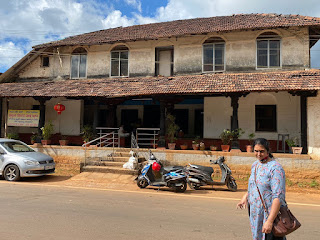
House where Naga episode of Malgudi days TV serial was shot


The whole town did it with no commercial arrangement, no money was taken for lodging them. They lent their brassware’s and other household items for recreating 1940s scenes in the serial. Some of these houses were converted into make believe Post Office and Police station of Malgudi. The crew even jokingly put up name boards like “Taj Continental’, ‘Ashoka Palace’ on the houses they were hosted to identify who was put-up where and what food parcel was to be served.

The town practically had no facilities , even for ration and other essentials, they had to go down the ghats to Hebri regularly recalls Ramesh Bhat (noted actor and product assistant). The Malgudi village is still more or less the same even now devoid of any modern trappings
Dodda Mane Agumbe Malgudi days house


Dodda Mane (meaning big house) is a colonial two storied tiled house with lovely inner courtyard. Its exquisite wooden carvings and stone pillars first set the imagination of shankar Nag rolling. The lady of the house Kasturi Jayrao actually set in motion a series of events that went to become 39 episodes beginning 1985 until a road accident snuffed out Shankarnag’s life in 1986.

As per Manjunath Nayaker who played Swami in Malgudi days, most of the shooting (Swami's home) took place in this house of Shankar Rao at Handalasu which is a small Village/hamlet in Tirthahalli Taluk in Shimoga District of Karnataka State (below)


swamis house in malgudi days


The extent to which Shankar Nag went to recreate Malgudi days


The three seasons of 13 episodes each, set in a 1940s British India, was created to meticulous detail. colonial props were created, background characters pulled in from surrounding villages, vintage cars like Austins were borrowed from friends….elephants, a road roller and such other stuff brought from Bangalore. Shankar even created the freedom movement by showing ‘andolan kartas’ in mundane scenes

The biggest challenge was to recreate the railway station of Malgudi. Since it had no station, Shankar Nag went to the nearby tiny railway station in Arasalu village, then a meter gauge line. Here he had to shoot a bored Swamy standing on a bench in the classroom and watch the train go by through the window. The problem was there was no railway station in Agumbe, so he tore down the school window, took it 78 kms away to Arsalu and recreated the scene masterfully with just the window separating Swamy and the train at Arsalu on opposite sides. The train could not be halted for the shoot, so the first and second shot was taken on opposite platforms. First when the train arrived in the morning and the second one in the opposite platform when it came back 20 minutes later

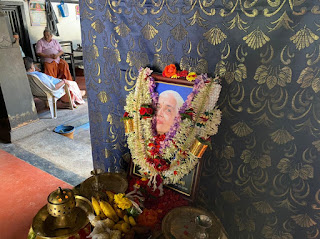
A tribute to the Malgudi Days (the iconic television serial) facilitator on the first death anniversary


lady behind the success of malgudi days TV serial


By some strange coincidence, it was the first death anniversary of Kasturi Jayarao when i visited Doddamane last Sunday (5th December 2021) . Her photo adorned the entrance and a few dozen friends & relatives of the lady were having ‘Tithi Oota’ in the adjacent makeshift tent. I met one of her relatives who said that all youngsters/progeny of the three sq km Agumbe, with its about 500 strong populace, have spread out across the world and it is only the elders staying back.


He graciously invited me for lunch and I politely told him that I was coming back from Shringeri after having lunch at the peetha. However I was hungry for more information about the stories surrounding Agumbe and Malgudi days. The grand daughter of Kasturi Jayarao who could have provided this was busy over seeing the function in the house. So I quietly took leave hoping to be back for more some day.

This blog article is a tribute to Kasturi Jayarao and countless others behind the scenes who quietly made the wonderful world of ‘Malgudi days’ come to life

Location Shimoga district, Karnataka, India
Famous for  Snakes, known as 'Cobra Capital' of India 
The Cherrapunji of South India
Nearby places Shringeri Sharadamba Temple (25 Kms)
Manipal (47 Kms)
Where to stay Seethanadi Nature camp, Hebri (15 Kms away)
seethanadi@junglelodges.com
Fares - 750 Camp tents, 1500 Cottages, fare includes coracle ride down the seethanadi river
Where to party Pubs & Bars like (Eye of the tiger) in Manipal


October 17, 2021

Space Force. Intergalactic Fashion and Earthly Mishaps

In a recent snippet that tickled my fancy in the Economic Times, it seems the Pentagon has decided to boldly go where no military has gone before. Virginia has become the unlikely docking station for our newest celestial protectors, the U.S. 'Space Force Guardians.' Decked out in uniforms that seem to be the lovechild of 'Star Trek' chic and 'Spaceballs' parody, these men in blue with oversized buttoned up flaps are Earth's newest line of defense against extraterrestrial ne'er-do-wells and the latest orbital shenanigans courtesy of our neighbors in the Chinese space program.

space force guardian uniform


One has to wonder, do these Guardians carry a 'Hitchhiker's Guide to the Galaxy' in their utility belts? Because, let's face it, if you're going to navigate the cosmos and fend off alien marauders, you'll want to do it with a bit of Douglas Adams' wisdom in your pocket—or at least know where your towel is.

The American spirit of 'go big or go home' is alive and well, it seems, even if sometimes the 'big' is more about style than substance. Take, for instance, the SEALs' legendary takedown in Abbottabad. They came loaded with all the sci-fi trimmings you'd expect—if Q from James Bond had a garage sale, it would look like their equipment room. But in a plot twist worthy of a space opera, one of their stealthy Apaches caught a case of the hiccups and ended up a lawn ornament in bin Laden's backyard.

And then, in a moment that would make MacGyver proud, they realized they'd forgotten something between the laser sights and night-vision goggles—a humble measuring tape. So, in a scene that surely baffled the meticulous planners, a SEAL had to play human ruler next to the body to estimate bin Laden's height. Because nothing says "precision military operation" quite like using a 'nap-time next to the bad guy' technique for biometrics.

So, as we look to the stars and dream of space cowboys, let's not forget the down-to-earth humor in our very human, sometimes comical, endeavors. Whether it's space sentinels in snazzy uniforms or SEALs improvising without a tape measure, one thing's for certain: the final frontier might just be the most entertaining saga of them all.

Feedburner Count